Screwworm is in three states and the border is reopening. What cattle owners should watch
Published · 4 min read
Here's a situation a lot of cattle people are watching with their jaw tight. New World screwworm, the pest that drove USDA to shut the southern border to Mexican cattle, is now turning up in animals inside the United States, in Texas, New Mexico and Arizona. And at the same time, USDA is reopening that border to cattle trade one port at a time.
What screwworm actually is
It's a fly, and the danger is the larvae. Unlike most maggots, which feed on dead tissue, screwworm larvae burrow into the living flesh of a warm-blooded animal through a wound, and the wound can be as small as a tick bite, a fresh brand, a castration site or a newborn's navel. Left alone an infestation gets worse fast and can kill the animal. The United States spent decades and a lot of money pushing this pest out, which is why a handful of cases gets treated as a big deal.
Where the cases are
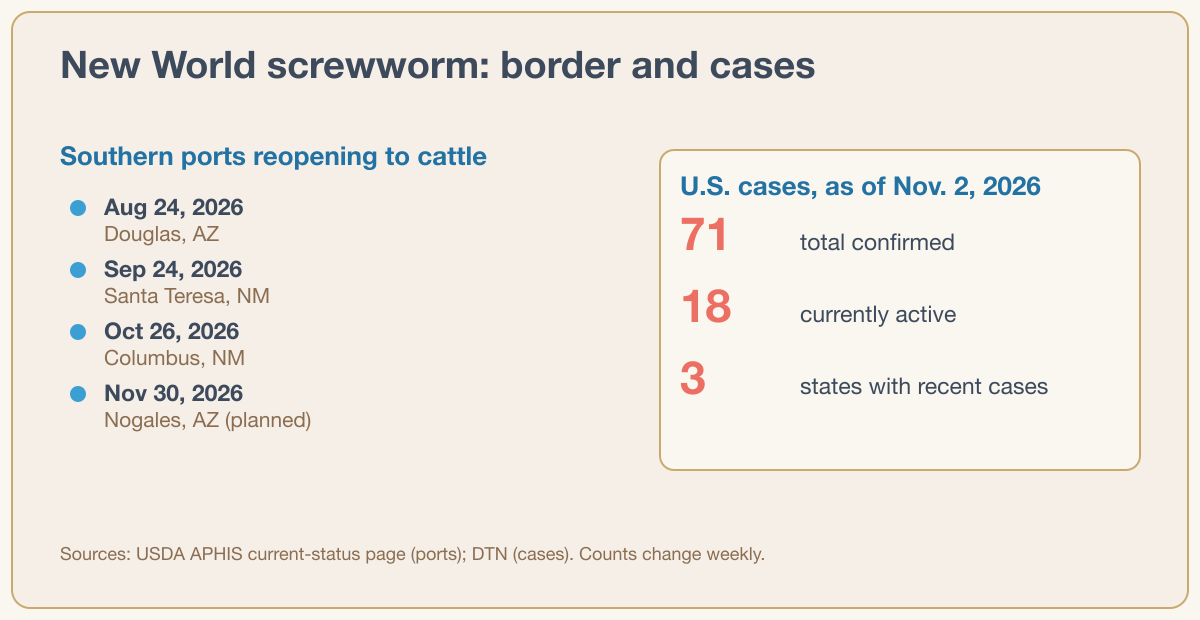
As of a DTN report dated Nov. 2, 2026, there were 71 confirmed U.S. cases, 18 of them active, and the recent ones were in Texas, New Mexico and Arizona. Two of the recent cases were New Mexico cattle found Oct. 24 and Oct. 26, and the first Arizona case, confirmed Oct. 28, was in a dog, with samples run at the USDA lab in Ames, Iowa. (DTN) Those numbers move week to week, so treat them as a snapshot.
The border is reopening in stages
USDA's current-status page lays out a phased reopening of southern ports to cattle imports: Douglas, Arizona on Aug. 24, 2026, Santa Teresa, New Mexico on Sept. 24, Columbus, New Mexico on Oct. 26, and Nogales, Arizona planned for Nov. 30, with that last date tied to conditions continuing to support safe trade and inspection. (USDA APHIS)
This is the part people argue about. One camp says reopening while cases are still popping up inside our own borders is moving too fast, and that cheaper imported feeder cattle undercut U.S. producers at the worst possible time. The other camp says the feedlots need those cattle, that the ports reopening with inspection in place is the whole point, and that keeping the border shut doesn't make the flies already here go away. We're not going to settle that one. Both sides are looking at the same map and reading it differently.
What to actually do on your place
Regardless of the politics, the on-the-ground advice doesn't change. Walk your animals and look at wounds, the places flies target: fresh brands, dehorning and castration sites, navels on calves, any cut or sore. If you see maggots in a wound, especially if they're burrowing in rather than sitting on the surface, treat it as a possible screwworm case and call your veterinarian or your state animal health official right away. Early reporting is how an outbreak gets boxed in. USDA's screwworm program page is the place to check for current maps and guidance.
It also helps to keep a record. If you log a health check or a treatment against each animal in nxtAcre, you've got the dates and the details in one place if an inspector or your vet ever needs the history, instead of trying to remember which heifer you doctored and when.
Here's the one worth hashing out in the comments: with 18 screwworm cases still active, is USDA reopening the border at the right pace, or too soon?
Questions and answers
What is New World screwworm and why is it dangerous?
It's a fly whose larvae burrow into the living tissue of warm-blooded animals through wounds. An untreated infestation worsens quickly and can kill the animal, which is why even a few cases prompt a major federal response.
Where has screwworm been found in the United States?
As of a Nov. 2, 2026 DTN report, there were 71 confirmed U.S. cases, 18 active, with recent cases in Texas, New Mexico and Arizona. Case counts change week to week, so check USDA APHIS for the latest.
Is the border with Mexico open to cattle?
USDA is reopening southern ports to cattle imports in phases. Douglas, Santa Teresa and Columbus reopened between August and October 2026, and Nogales, Arizona was planned for Nov. 30, 2026, subject to conditions.
What should I do if I find maggots in an animal's wound?
Treat it as a possible screwworm case. Contact your veterinarian or state animal health official right away. Early reporting is how an outbreak is contained.